

In 2026, nonprofit web design cost typically ranges from $1,500 to $15,000. The final price mainly depends on the size of the website, the level of customization, and the features required, such as donation tools, event pages, and campaign landing pages. A simple informational site with a few pages costs far less than a fully customized nonprofit platform built to support ongoing fundraising.
Many nonprofit organizations also need functionality that goes beyond a standard business website. This can include online donations, volunteer registration forms, fundraising campaign setups, email integrations, and transparency reporting (impact pages, financial documents, and annual reports). Each of these elements adds design, development, and testing time.
Cost transparency matters because nonprofits often work with limited budgets, grant requirements, or donor-funded resources. Knowing realistic pricing upfront helps organizations plan responsibly, avoid unexpected add-ons, and choose a website scope that supports their mission without overspending.
How Much Does Non Profit Web Design Cost In 2026?
In 2026, nonprofit web design cost typically ranges from $1,500 to $15,000, depending on the size of the website, the level of customization required, and the features needed to support fundraising and community engagement.
Smaller nonprofit websites with a few informational pages and a basic donation button fall at the lower end of the range, while larger organizations with custom design, advanced integrations, and campaign management tools usually require a higher investment.
Non Profit Web Design Cost by Platform:
The platform used to build a nonprofit website has a direct impact on the overall design and development cost. Different platforms offer varying levels of customization, scalability, and built-in functionality. Some platforms are designed for quick setup and lower budgets, while others support advanced fundraising systems, integrations, and complex content structures.
Below is a breakdown of the most common platforms nonprofits use and how each one affects website cost.
1. WordPress Non Profit Website Design Cost:
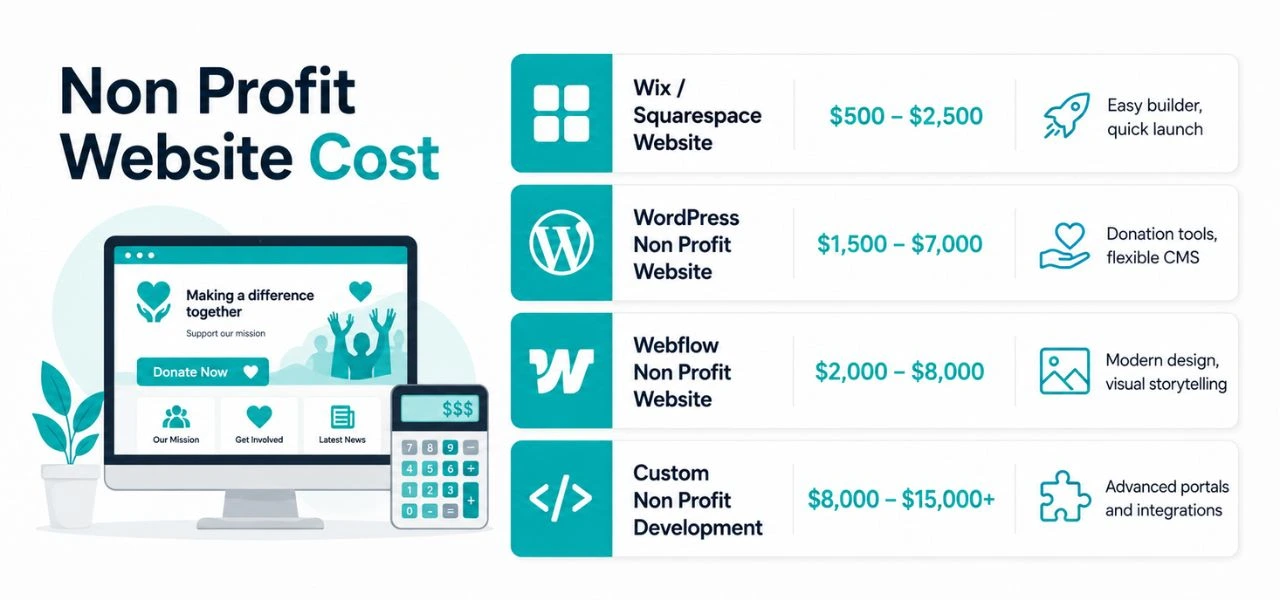
A WordPress nonprofit website typically costs $1,500 to $7,000, depending on design customization, the number of pages, and the plugins required. WordPress is widely used because it supports powerful donation tools, fundraising plugins, volunteer registration forms, and event management systems.
Nonprofits often choose WordPress because it allows flexibility in design and functionality while keeping development costs reasonable. According to W3Techs (2025), WordPress powers more than 43% of all websites globally, making it the most commonly used CMS for nonprofit organizations.
2. Other Website Builders Cost (Wix / Squarespace):
Websites built using Wix or Squarespace usually cost between $500 and $2,500. These platforms provide ready-made templates, drag-and-drop editing, and built-in hosting, which makes them easier to launch for small nonprofits with limited budgets.
However, website builders can have limitations when organizations require advanced donation tools, complex integrations, or larger content structures for campaigns and fundraising initiatives.
3. Webflow Non Profit Website Design Cost:
A Webflow nonprofit website generally costs $2,000 to $8,000, depending on the level of design customization and CMS configuration. Webflow allows designers to create modern, highly customized layouts while still offering a structured content management system.
Nonprofits that prioritize visual storytelling, campaign landing pages, and interactive design elements often choose Webflow for its design flexibility and performance capabilities.
4. Custom Non Profit Website Development Cost:
A fully custom nonprofit website typically costs $8,000 to $15,000 or more, depending on the complexity of the project. Custom development is often used by larger nonprofit organizations that require advanced features such as donor portals, membership systems, CRM integrations, or complex fundraising platforms.
While custom websites require a higher initial investment, they offer the greatest level of scalability and control, allowing nonprofits to build a digital platform tailored specifically to their fundraising and operational needs.
What’s Included in Non Profit Website Design Pricing?
Nonprofit website design projects usually include several core deliverables that help organizations launch a professional and functional website. These elements focus on supporting fundraising, communication, and community engagement while allowing nonprofit teams to manage their website easily after launch.
1. Responsive Website Design:
Most nonprofit web design packages include responsive design, ensuring the website works smoothly across desktop, tablet, and mobile devices. Since many donors and supporters access nonprofit websites through smartphones, responsive layouts are essential for usability and engagement.
2. CMS Setup and Page Templates:
Agencies typically configure a content management system (CMS) such as WordPress or Webflow. This setup allows nonprofit teams to update content, add new pages, publish news, or share updates without needing technical expertise. Page templates are also created to maintain consistent design across service pages, blog posts, and campaign content.
3. Donation System Integration:
Nonprofit websites often require secure donation systems. This usually involves integrating payment gateways such as Stripe or PayPal and creating donation forms for one-time or recurring contributions. Proper integration ensures secure transactions and a smooth donation experience for supporters.
4. Basic SEO Configuration:
Most web design packages also include basic search engine optimization (SEO) setup. This typically involves configuring page titles, meta descriptions, URL structures, and site indexing so the website can be discovered through search engines.
5. Analytics and Accessibility Setup:
Many agencies include analytics tools, such as Google Analytics, to track website visitors and user behavior. Accessibility improvements may also be implemented to help ensure the website is usable for a wider audience, including individuals with disabilities.
6. Optional Features and Add-Ons:
Some features are usually offered as optional upgrades rather than part of the standard package. These may include CRM integrations for donor management, multilingual website support, advanced donation analytics, or automated fundraising tools designed for large nonprofit campaigns.
| Included | Not Included |
|---|---|
| Responsive website design | Ongoing marketing campaigns |
| CMS setup and page templates | Large-scale CRM integrations |
| Donation system integration | Advanced automation systems |
| Basic SEO setup | Paid advertising management |
What Factors Affect Non Profit Web Design Cost?
The cost of a nonprofit website can vary widely depending on the scope of the project and the features required. While some organizations only need a small informational site, others require complex fundraising systems and campaign pages. Several key factors influence how much a nonprofit website will cost to design and develop.
1. Number of Pages:
The total number of pages on a nonprofit website directly affects the overall development cost. Many nonprofit organizations require multiple sections such as donation pages, program pages, impact reports, blog articles, volunteer information, and event calendars. Each additional page requires design layout, content structuring, and development work, which increases the total project time.
2. Donation and Payment Integrations:
Most nonprofit websites require secure payment systems to accept online donations. Integrating payment gateways such as Stripe or PayPal involves configuring secure transaction systems, creating donation forms, and ensuring compliance with payment security standards. If the website also includes recurring donations or fundraising tools, the development complexity may increase.
3. Custom Design and Branding:
The level of design customization can significantly affect website cost. Nonprofits that require unique layouts, branded visuals, interactive storytelling sections, or animated elements typically pay more than organizations using standard templates. Custom campaign landing pages for fundraising initiatives can also increase design and development time.
4. Content and Storytelling Requirements:
Nonprofit websites often focus heavily on storytelling and impact communication. Organizations frequently include case studies, program highlights, success stories, and annual reports to build trust with donors. Structuring and presenting this type of content in a clear and engaging way may require additional design planning and content organization.
5. Advanced Features:
Some nonprofit websites include advanced functionality that goes beyond basic pages and donation tools. Features such as volunteer management systems, event registration platforms, donor dashboards, and CRM integrations can add significant complexity to the project. These features require additional development, testing, and integration work, which can increase the overall website cost.
Also Read: Custom Web App Development Cost In 2026
Frequently Asked Questions
Plan $60–$600 per year for hosting, domain, SSL, and backups. Donation-heavy or high-traffic sites often need managed hosting and stronger security, pushing costs toward the upper end.
Get Best Prices For Non Profit Website Design:
Your website plays a major role in how donors discover your organization, understand your mission, and decide to contribute. A well-designed nonprofit website can support fundraising, volunteer engagement, and long-term credibility without requiring an overly complex or expensive setup.
Nexal IT Services helps nonprofit organizations build professional, cost-efficient websites with features such as donation integrations, volunteer forms, and scalable website structures designed for growth. If your organization is planning a new website or upgrading an existing one, contact Nexal IT Services to get a custom quote and build a nonprofit website that fits your budget.