
Medical Practice Website Design That Helps Patients Choose You

At Nexal IT Services, we provide medical practice website design services that help doctors and clinics build patient trust, explain care options, and support practice growth. Our medical web design includes online appointments, secure forms, mobile-friendly pages, medical SEO, and clear contact paths so patients can take the next step with confidence.
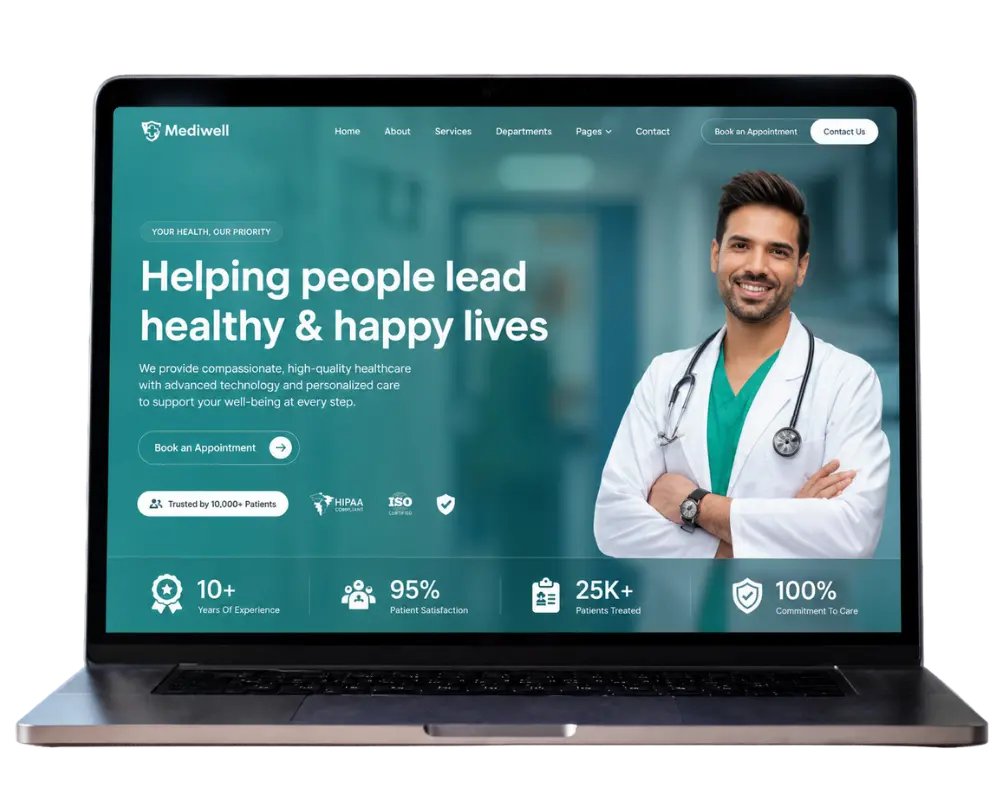
Medical practice website design displayed on a laptop screen with a modern healthcare homepage, doctor image, teal layout, appointment button, and patient care highlights.

Recognized and Trusted by Industry Platforms

GoodFirms
Trustpilot
Glassdoor
TopDevelopers
Google
Reviews.io
Yelp
Crunchbase
Techreviewer
GoodFirms
Trustpilot
Glassdoor
TopDevelopers
Google
Reviews.io
Yelp
Crunchbase
Techreviewer

Why Should You Create A Website For Your Medical Practice?

A website is important for your medical practice because patients often search online before choosing a doctor, clinic, or care provider. According to Tebra’s 2024 patient review survey, 77% of patients use online reviews as the first step when finding a new doctor, which means your website, reviews, services, and appointment options work together to build trust. A clear medical website helps patients understand your care, request appointments, complete forms, and contact your practice with less confusion.

Why Do Medical Practices Need Better Websites?

An old medical website can make patients leave before they learn about your care. Slow pages, unclear service pages, poor mobile design, weak trust signals, hidden phone numbers, missing appointment options, and low local search visibility can reduce calls, forms, and booked visits.

Patient Search Behavior

Patients often search online before they choose a doctor or clinic. They may look for symptoms, services, insurance, location, reviews, doctor bios, and appointment options on their phone. A clear website helps them find the right information fast.

Faster Care Decisions

Simple pages help patients decide faster. They can read about services, conditions treated, doctor credentials, office hours, locations, phone numbers, patient forms, and appointment buttons without feeling lost or confused.

Stronger Local Presence

A well-planned website can help nearby patients find your practice more easily online. With professional website design for medical practices, your site can include clear service pages, location-focused city pages, medical SEO, accurate clinic details, and helpful content that supports better visibility when people search for care in your area.

What Our Medical Web Design Includes?

Our medical web design includes custom design, mobile-friendly development, CMS setup, service pages, doctor bios, appointment buttons, secure forms, medical SEO, accessibility basics, fast speed, analytics, and support. Each part helps patients learn about your care and contact your team easily.

Custom Practice Design

Custom practice design helps your website match your clinic's brand, specialty, colors, tone, doctors, office feel, and care style. The goal is to make the site feel calm, clear, and easy for patients who want to learn more before they call or book.

Service Page Setup

Service pages explain what your practice treats and how patients can get help. These pages can cover conditions, treatments, specialties, insurance details, patient education, location-based services, and clear appointment buttons for the next step.

Provider Bio Pages

Provider bio pages help patients learn about each doctor or care provider. They can show credentials, specialties, experience, education, languages, care style, photos, reviews, and booking options so patients can feel more confident before choosing care.

CMS And Updates

A CMS lets your team update office hours, staff bios, services, patient resources, announcements, blogs, policies, and location details without needing help for every small change. This keeps your website fresh, correct, and useful for patients.

Medical Website Features That Help Patients

Helpful medical website features make it easier for patients to take action and reduce extra work for the front desk. Online appointments, secure forms, patient resources, portal links, bill pay, contact details, location pages, and mobile access help patients get answers faster and complete simple tasks on their own.

Online Appointment Booking

Online appointment booking helps patients request care without making a phone call every time. Appointment buttons, booking calendars, request forms, provider selection, location selection, and visit type options make routine scheduling easier for both patients and staff.

Secure Patient Forms

Secure patient forms help collect important details before a visit. Intake forms, contact forms, consent forms, insurance details, privacy notices, and HIPAA-aware handling give patients a safer way to submit information through clear and protected paths.

Patient Resource Center

A patient resource center gives people helpful answers in one place. It can include patient education, FAQs, insurance guidance, visit preparation steps, office policies, downloadable forms, post-visit instructions, and content that helps reduce confusion.

Payment And Portal

Payment and portal links help patients handle common tasks faster. Patient portal access, online bill pay, billing details, account login, payment instructions, and support links make it easier to manage care details without calling the office for every question.

Types Of Medical Websites We Build

Different medical practices need different website structures based on specialty, provider count, patient needs, appointment flow, and location setup. An eye care clinic may need procedure pages, while a therapy practice may need soft messaging, provider bios, and private ways to request support.

Ophthalmology Practice Sites

Ophthalmology websites can explain eye exams, cataract care, LASIK, glaucoma treatment, dry eye care, retina services, insurance details, provider bios, and appointment options. Clear pages help patients understand eye care services before they call or book.

Mental Health Practice Sites

Mental health practice websites should feel calm, private, and easy to use. They can cover therapy services, provider bios, treatment methods, telehealth, insurance, supported concerns, appointment forms, and simple contact paths for people ready to ask for help.

Private Clinic Sites

Private clinic websites can present doctor profiles, services, patient forms, office hours, insurance details, location pages, reviews, and appointment CTAs. The goal is to help patients quickly see what care is offered and how to contact the clinic.

Dental Clinic Sites

Dental clinic websites can explain cleanings, exams, cosmetic dentistry, emergency dental care, insurance details, financing, patient reviews, and appointment options. Before-and-after visuals can also help patients understand treatment results before booking.

Therapist Website Design

Therapist websites should build trust with warm copy, clear bios, therapy services, treatment approaches, privacy details, telehealth options, insurance information, and contact forms. A simple design helps clients feel safer taking the first step.

Pediatric Clinic Sites

Pediatric clinic websites can help parents find care details fast. They may include newborn care, well-child visits, immunizations, school forms, sick visits, provider bios, office policies, insurance details, and easy contact options for families.

Dermatology Clinic Sites

Dermatology websites can explain skin checks, acne care, eczema treatment, cosmetic services, laser treatments, procedure details, provider credentials, and appointment options. Clear service pages help patients understand both medical and cosmetic care.

How Much Medical Practice Website Design Costs

Medical practice website design can cost around $1,000 to $2,000 for a simple clinic website, $3,000 to $5,000 for a custom medical website, and $6,000 to $20,000+ for larger practices, multi-location websites, or broader website projects. Cost depends on page count, provider count, CMS, service pages, content, secure forms, appointment tools, accessibility checks, SEO, integrations, hosting, support, and future updates.

Medical Practice SEO And Local Patient Visibility

Medical SEO helps patients find your practice when they search for care online. They may look for a service, symptom, condition, doctor, specialty, or clinic near them. With clear service pages, location pages, and strong Google visibility, your website can bring more local patients to your practice.

Local SEO Setup

Local SEO helps nearby patients find your clinic in search results. City pages, service areas, Google Business Profile, correct name, address, and phone details, schema, title tags, meta descriptions, and internal links all help Google connect your practice with local searches.

Service SEO Pages

Service SEO pages explain the care your practice offers. These pages can cover treatments, conditions, specialties, symptoms, procedures, insurance terms, and patient questions. This helps patients understand their options and helps search engines read your website better.

Medical Content Plan

A medical content plan gives patients helpful answers before they call. Blogs, FAQs, care guides, condition explainers, treatment pages, and provider-reviewed content can build trust, answer common questions, and support better organic rankings over time.

Technical SEO Basics

Technical SEO helps your website load fast and stay easy to use. Speed, mobile usability, clean URLs, redirects, image optimization, crawlable pages, indexable content, analytics, Search Console, and structured data all support better search performance.

Compliance And Accessibility For Medical Websites

Medical websites need careful planning around accessibility, privacy, secure forms, readable content, SSL, and patient information flows. The goal is to make the website easier and safer for patients to use, while giving clear paths for forms, messages, appointments, and privacy details.

Website Accessibility Basics

Website accessibility helps more patients use your site with less trouble. Readable text, strong color contrast, keyboard navigation, alt text, form labels, clear headings, responsive layouts, and WCAG-informed checks can make the website easier to read and move through.

Secure Website Forms

Secure forms help protect patient inquiries and reduce risk. SSL, protected submissions, privacy notices, limited data collection, secure routing, and HIPAA-aware form workflows can help your practice collect details in a safer and more careful way.

Clear Privacy Paths

Clear privacy paths help patients know how their information may be handled. Privacy policy pages, terms, consent language, patient communication notes, form disclaimers, portal links, and clear guidance for sensitive health details can reduce confusion.

Our Medical Website Design Process Explained

Our medical website design process moves from discovery to planning, design, content, development, testing, launch, and support. Each step is organized to help your practice explain care clearly, guide patients to the right action, and build a website that supports trust, access, and long-term growth.

01.

Discovery And Planning

We start by learning about your practice goals, specialties, providers, locations, patient types, appointment needs, content gaps, competitors, compliance needs, and growth goals. This helps us plan a website that fits your patients and your practice.

02.

Design And Content

Design and content planning covers the homepage structure, service pages, provider bios, patient resources, CTAs, location details, trust signals, content writing, and mobile-first design. The goal is to make care details easy to find and understand.

03.

Build And Testing

Build and testing include responsive development, CMS setup, forms, integrations, speed checks, mobile testing, browser testing, accessibility checks, and quality review. This helps the website work smoothly before patients start using it.

04.

Launch And Support

Launch and support include launch setup, redirects, analytics, Search Console, CMS training, post-launch fixes, content updates, SEO checks, and ongoing website support. This helps your practice keep the website accurate, useful, and ready for future needs.

Why Choose Us For Medical Web Development?

Nexal IT Services is a good fit for practitioners who need professional website design for medical practices, along with clear planning, patient-first design, SEO, secure forms, accessibility awareness, integrations, CMS setup, and reliable support. We build medical websites that help patients understand your care, trust your team, and feel ready to take the next step.

Patient First Design

Patient-first design helps people find services, understand care options, trust providers, contact the office, request appointments, and access helpful resources. The goal is to make the website simple, calm, and easy for patients to use on any device.

Healthcare Web Knowledge

Healthcare web knowledge helps us plan medical content in the right way. This includes service pages, provider bios, patient forms, accessibility basics, appointment flows, local SEO, and website needs that are specific to doctors, clinics, and healthcare practices.

Support After Launch

Support after launch helps your website stay current as your practice changes. This can include page updates, provider changes, service edits, blog support, technical fixes, analytics review, SEO improvements, and future website growth.

Ready To Build Your Practice Website

Ready to build a medical practice website that helps patients trust your care and take action? Nexal IT Services can help you plan a clear website with online appointments, secure forms, and stronger local visibility. Share your goals with our team, and we'll help you start the project with the right direction.

FAQs

Frequently AskedQuestions